Towards the end of Planet of the Apes (the original 1968 version) the borderline grotesque human George Taylor (Charlton Heston) commands his two ape saviours, Cornelius and Zira, and his ape captive, Dr. Zaius, to show him the ancient remains of pre-simian creatures in a cave located in the so-called ‘Forbidden Zone’. The remains had been discovered by Cornelius, who is an archaeologist, but his project was shut down by the superior Zaius who fears that the discovery demonstrates the past intelligence and social sophistication of humans – a species that are currently subjugated by the apes. Cornelius and Zaius are played by British actors Roddy McDowall and Maurice Evans respectively, and their Shakespearean accents (with a tinge of upper-class academia) lends itself to a very reverent presence, such was commonly utilised in Hollywood movies back in the day. As Taylor, Cornelius, Zira, Zaius, and Taylor’s long-suffering, mute ‘mate’ Nova sit around in the cave, we are entreated to a spiel from both Cornelius and Zaius about the discovery and their speculations on it.
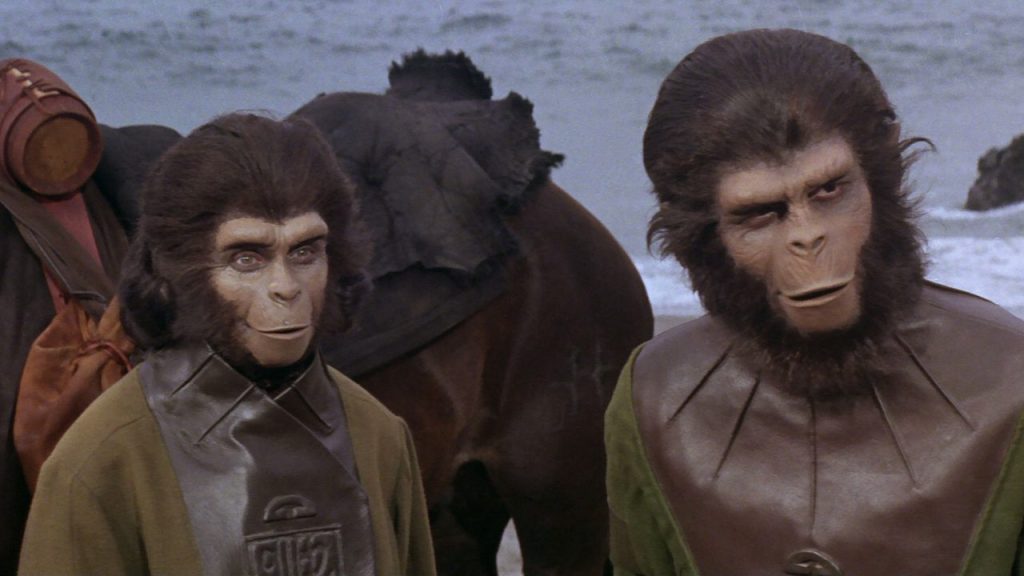
Planet of the Apes was a brilliant, big budget, old school Hollywood production (in contrast to the new independent films starting to appear in the US at that time), and was adapted by progressive writers Michael Wilson and Rod Sterling from a novel by French author Pierre Boulle. As a result, it has this weird mix of out-dated ideas set alongside some very progressive notions, which brings me to the positioning of this scene near the end of the film in the context of archaeology. Cornelius is meant to be the voice of reason among the irrational, puritanical and essentially racist apes (personified by the god-fearing Zaius). But he is not a good archaeologist, and the project’s set-up inside the cave looks like an archaeologist’s nightmare. There are obvious visual signs from the remains that point to humans, but somehow, it is a shocking revelation to Cornelius and Zira when Taylor picks up a doll and it lets out a human baby cry (lets ignore the fact that the dolls’ batteries have lasted all this time). I presume there were no archaeological advisors amongst the crew, but something tells me that McDowall may have spoken to people in his circles about how to portray an archaeologist. Being British, these were likely academic types, given the fact that Cornelius’ statements are very arrogant in nature.
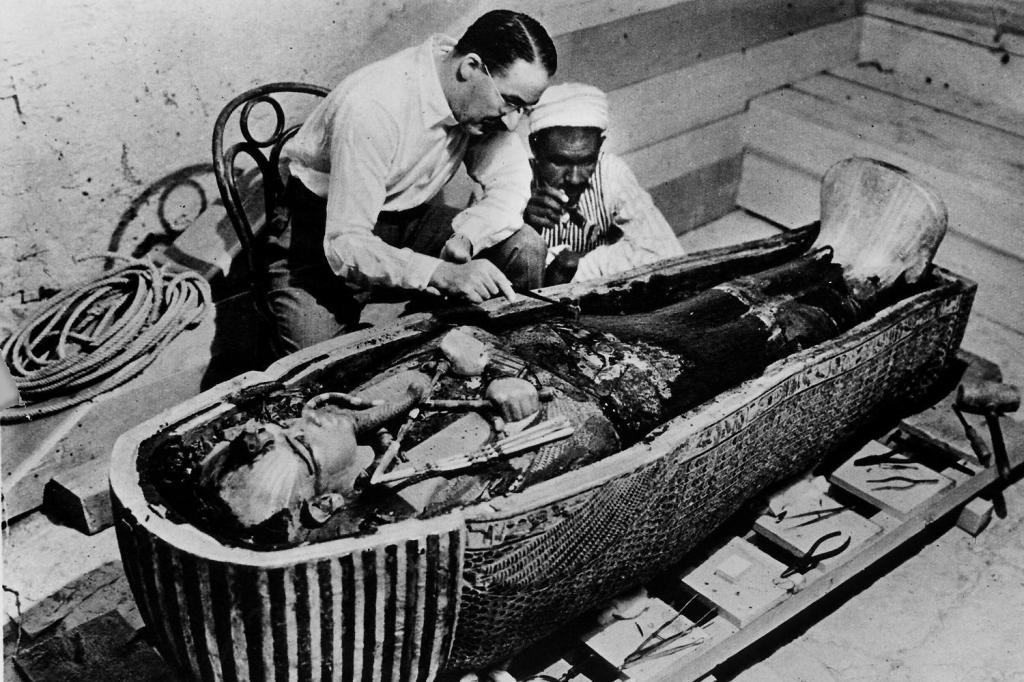
But none of this surprising. The origins of modern archaeology are very British, and very colonial. Stemming from antiquarianism in the 19th Century, archaeology developed into a wider academic discipline that established methodologies for surveying, excavating and analysing material from the past. Flinders Petrie, Howard Carter, Arthur Evans, and Mortimer Wheeler were all pioneering archaeologists from Britain who achieved fame and posited great influence on the discipline (and later, the profession) in the first half of the 20th Century. They also helped to popularise archaeology around the world – for example, the well-documented discoveries of Tutankhamun’s tomb, the ancient cities of Troy and Knossos, and the remains under the volcanic ash-covered Pompeii. Knighthoods for these academics were widespread, and the old Empire were very keen to cash in on the discoveries by having much of this exciting material brought to British museums for public display. Mark Fennell has brilliantly cast a lens on this practice, essentially a contributing factor to cultural genocide, in his Australian Broadcasting Corporation (ABC) TV and podcast series Stuff the British Stole. For so long, the public have been duped into thinking all of this ‘curation’ was for the betterment of the material without a single, solitary thought given for the people and ancestors who associate with it more directly. It comes from a deeply arrogant and subjective place, a place just like that inhabited by Cornelius and Zaius in Planet of the Apes.
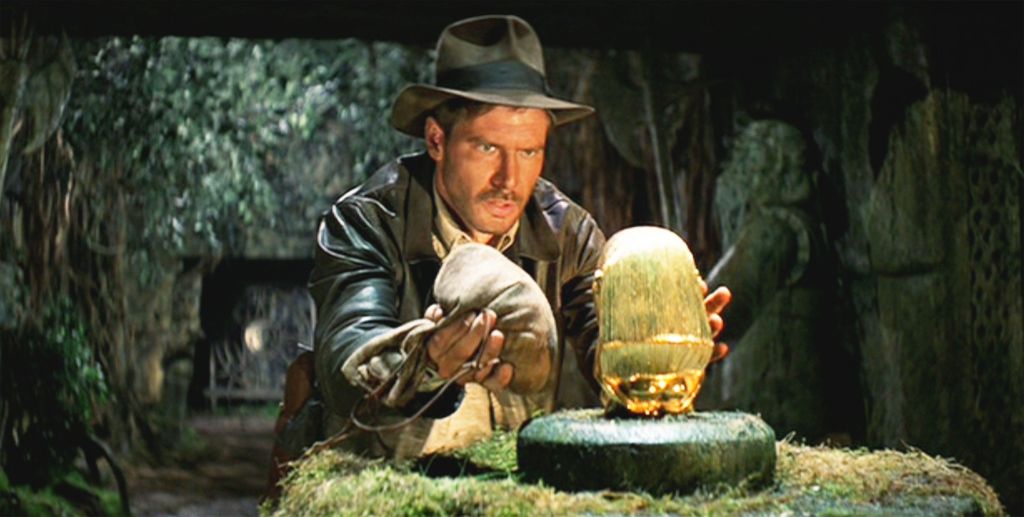
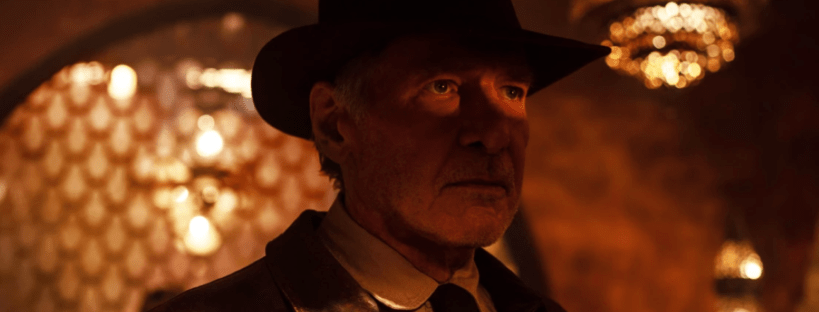
In a Marvel Comic from 1983 entitled The Further Adventures of Indiana Jones – The Fourth Nail, Chapter 1: Blood and Sand, the titular hero is being chased through the Gibson Desert in Australia by an angry mob of Aboriginal warriors (unsurprisingly referred to as ‘Aborigines’) who are not happy that he has taken their ‘Arnhem Artifacts’ in order to ‘bring them back to the museum’. Now, none of the Lucasfilm movies are set in Australia, but we are all aware that Indy’s thoroughly (dis)honest quest to fight against hostile forces in order to protect ancient relics is his raison d’etre. Here we have the single-most, greatest influence on a whole generation of would-be young archaeologists since the early eighties (myself among them). In many ways, he is the comic-book version of Howard Carter. But instead of a stuffy British professor, he is an all-American professor of archaeology from Princeton, who throughout the 1930s, 40s and 50s gets himself involved in some international shenanigans involving arks, temples, crusades, and crystal skulls (and soon, a ‘dial of destiny’). Stephen Spielberg and George Lucas were supposedly inspired by adventurous masculine types from early films, books and pulp magazines – there is speculation that Professor Challenger from Arthur Conan Doyle’s The Lost World (who was based on a real archaeologist) was a primary source, but in the main, Indiana Jones was an original creation. In the films, his moments as a tenured classroom-based lecturer quickly give way to his frenetic, in-the-field adventures, where he beats up Nazis, crack-whips some scumbags in the jungle, and shoots sword-wielding baddies in Egypt. Never do we find him writing up context sheets and drawing up stratigraphic profiles on excavation digs! Perhaps it is no bad thing that he has had a positive influence on modern-day archaeologists, but we must at some stage deal with the serious impacts that Spielberg’s films (and subsequent other media) have had on the public outlook of Indigenous peoples over time.
The link between archaeology and racism is not always easy to digest for the discipline. That is not to say that many archaeologists are not working hard to address the issue – the establishment of national and international bodies with codes of ethics, guidelines on engagement, and professional standards is one way in which archaeologists can attempt to combat against racism in the modern space, but there is still a lot to do. And the onset of disinformation and pseudoscience across the public sphere is a massive problem that ethical archaeologists now commonly face. For the past two decades, cable TV networks such as the Discovery Channel, The History Channel, and even lately National Geographic, offer entertainment ‘documentary’ programmes about treasure hunting, metal detecting, and ancient aliens, which have proliferated non-factual ideas about our past to farcical and ludicrous proportions. But surely, this was always seen as fringe, and the viewership was pretty small to really worry the archaeology world? Well, Netflix’s recent warm embrace of pseudoarchaeology in the form of Graham Hancock’s Ancient Apocalypse is most certainly a cause for alarm, particularly when it was among the most watched ‘documentary series’ on the platform last year.
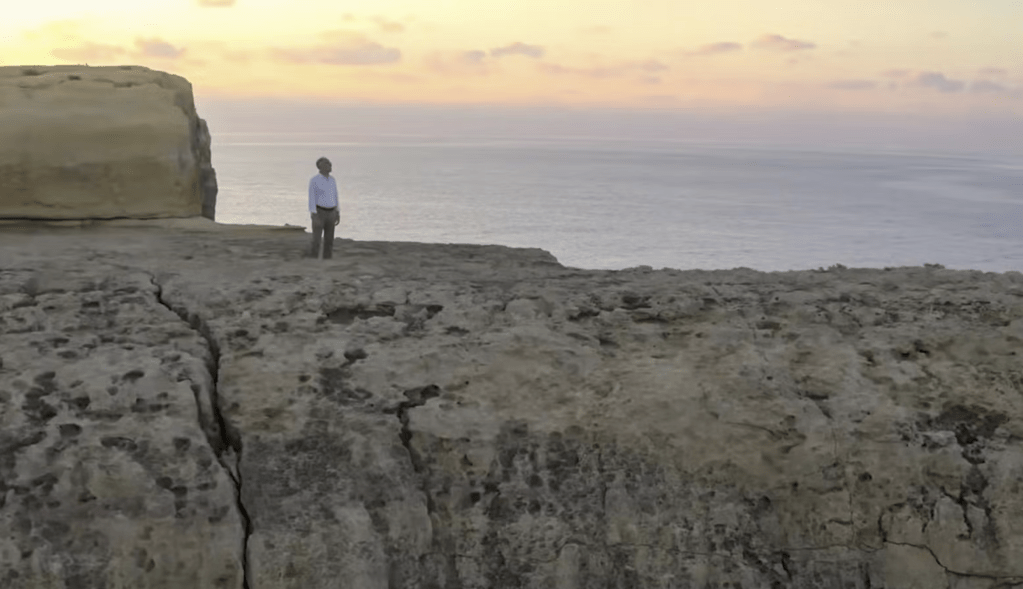
Hancock has been around for a while, mostly dropping some psychedelics in South America, writing some silly sci-fi novels (which, surprise, surprise, were inspiration for Roland Emmerich’s many dreadful sci-fi films in the nineties), and then going on a popular podcast railing against a so-called ‘Big Archaeology’ – who, he says, are covering up what he believes is evidence of an ancient civilisation that was much more advanced than the people that followed (i.e. the ancestors of Indigenous people). In his grand, flashy and well-funded Netflix series (thanks mainly to his son who works there), he manifests his racist, white supremacist wet dream by travelling to archaeological sites around the world, talking to pseudoscientists who agree with him, and then concluding (usually whilst looking off into space and looking ridiculous) that all of his theories about an advanced ancient race are true and his detractors (actually trained archaeologists) are wrong and covering up the truth. Not one Indigenous person was interviewed during the series even though he visited sites in North and South America and south-east Asia, where he would have had the opportunity. As an archaeologist working in Australia, I have met people who speak with certainty about Hancock’s theories (their backgrounds and prominent positions have raised my eye-brows), and it is with increasing worry that this conspiratorial nonsense is leaving the fringes and steadily working its way into the mainstream. Archaeologists have publicly denounced and decried Hancock and the drivel of his ilk, but how are we meant to counteract the ascension of people like Joe Rogan, who has the Trumpian megaphone to allow this drivel to be heard by millions? Are archaeologists doing it wrong? Do we need to be on Joe Rogan too?

Well, something needs to be done, and I think it can be done. On film, there are some realistic and positive portrayals of archaeologists that are worthy of celebration and should be followed. In Werner Herzog’s extraordinary 2010 documentary, Cave of Forgotten Dreams, he explores the amazing paleolithic paintings at Chauvet Cave in Southern France. He often approaches the content from alternative angles, but that is ok because it’s not pseudoarchaeology. It is ‘Herzogian’, meaning it is tinged with a respectful and inquisitive fascination, and for me, this is the ideal way to present archaeology to the wider world. There is a pure, phenomenological approach by Herzog as he manages to get special permission from the French Minister of Culture for himself and a small film crew to descend into the cave and record the sites and sounds, and communicate the feelings they have when down there. It is surreal, affecting and points to the mystery and magnificence of experiencing the world’s treasures of the past, as often archaeologists do. Herzog interviews genuinely enthusiastic researchers (palaeontologists, archaeologists, and perfume specialists), and gives them the platform to speak openly about their awesome work on this enigmatic ancient art.
There are other positive portrayals of archaeology out there too. The ABC have frequently presented Australian archaeological research on the small screen. For example, First Footprints is a visually stunning documentary series from 2013 that explores Australia’s past prior to invasion and colonisation, presenting archaeological discoveries and their connecting stories from Aboriginal knowledge in the most impressive and non-egocentric ways. Further, in the extremely successful and quirky ABC series for kids, Bluey, the main character’s dad, Bandit Heeler, is an archaeologist, and considering the underlying warm portrayal of parenting and role modelling, he is an ethical and positive influence on his son through his status as a parent and a professional, which is good to see.
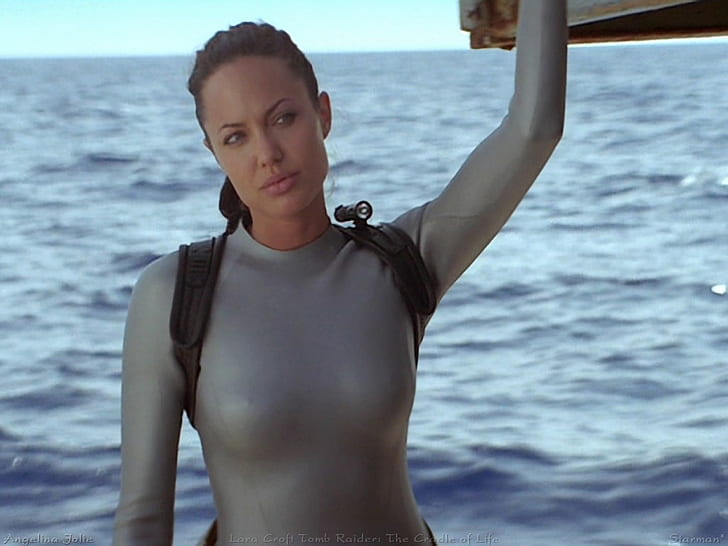
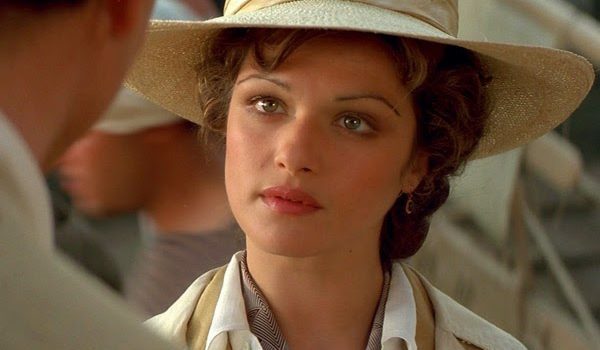
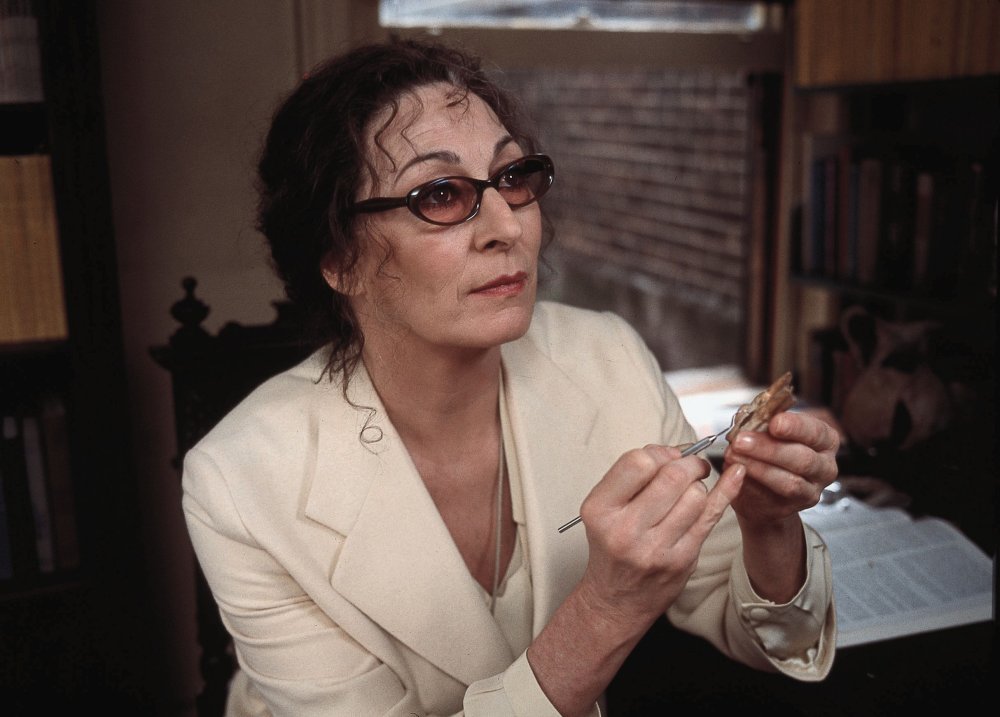
When it comes to female archaeologists on screen, there are a few promising (but equally troubling) examples to discuss. The most famous of course being Lara Croft from the Tomb Raider video games, which began in the nineties, and the subsequent films with Angelina Jolie that followed in the 2000s (how awful they really were). Despite the sense of adventure and intrigue the stories brought, it was essentially a male fantasy creation – to put it bluntly, ‘Indiana Jones with big boobs’! This was followed by the blatant Tomb Raider/Indy rip-off series, Relic Hunter, where Tia Carrere plays Sydney Fox, a globe-trotting archaeologist who returns stolen ‘artifacts’ to museums (sound familiar?). But then we do have Rachel Weisz in The Mummy. She plays Evelyn Carnahan, an aspiring Egyptologist in the 1920s who has an enthusiasm for ancient discovery – she is semi-based on Lord Carnarvon’s daughter, who partook in the Tutankhamun excavations. In the end, The Mummy is an adventure film about ancient curses and a bit of tomb raiding, but Weisz portrays a character many archaeologists can connect with. In a more modern setting, we have Etheline Tenenbaum (portrayed by Angelica Huston), who is the mother to three genius children in Wes Anderson’s The Royal Tenenbaums. She is ‘a noted archaeologist and author’, and we meet her first on an urban archaeological excavation, which, in true Anderson cinematic fashion, is presented in impressive detail (none of this is surprising given that Anderson’s mother was an archaeologist herself).
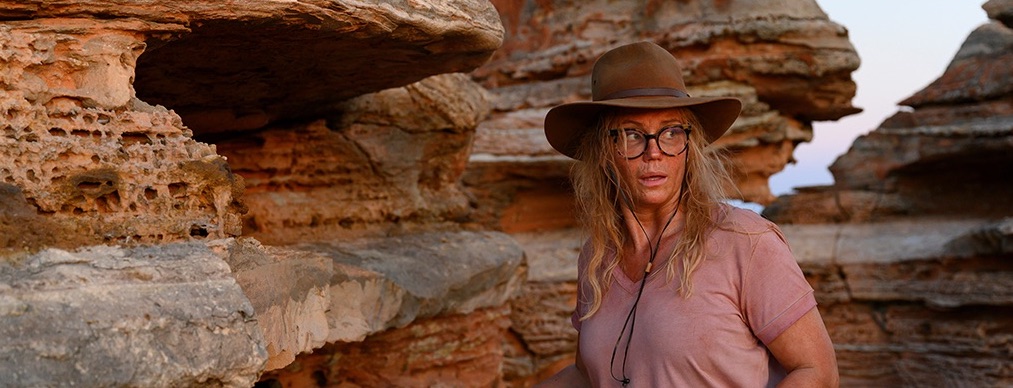
The portrayal of archaeologists on film can sometimes be understandably ambiguous – isn’t life like that? We all know there are problems in archaeology and the people who work in the profession are not always perfect, and sometimes walk down unethical paths. Coming back to Australia and the ABC, a recent (and brilliant) series called Mystery Road (expanding on two movies that had been released prior, Mystery Road and Goldstone) explores many themes on modern Aboriginal Australia. In the second series, there is an archaeologist character with dubious motivations (played by Sofia Helin) – she is a Swedish blow-in working on an excavation with local Traditional Owners when she finds a recently disposed-of body but, sensing it could close down her research, she covers it up, and sides against other locals who are suspicious. I don’t think this part of the series was as carefully managed as it should have been, but it does speak to a point of view that archaeologists sometimes rate academic ambition over respect for traditional practices and knowledge, and by jingo, does that ring true in the work that I have experienced. However, I would counter that with the fact that archaeologists like the one portrayed by Ms Helin are in the minority.
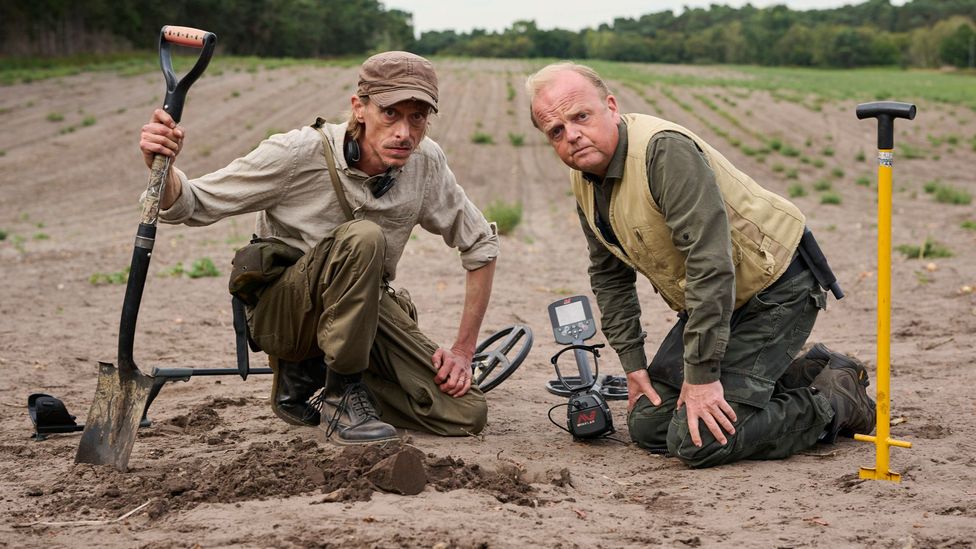
Sometimes negativity towards our profession like this is justified. Sometimes it goes over the top. For example, in the very entertaining and well-made British comedy series, Detectorists, archaeologists are often described as the enemy. Mackenzie Crook writes and stars in the show, his character being part of a club that basically go around digging bottle caps and other sub-surface trinkets with their metal detectors, much to the chagrin of actual archaeologists. Crook’s character actually aspires to be a proper archaeologist but he seems to be thwarted by the ‘Big Archaeology’ that Hancock harps on about. He eventually gets the archaeology qualifications, but the show seems to imply that it shouldn’t be so hard and people like him should be allowed to go and dig anywhere they like, which I find to be extremely childish. What an injustice that someone should be required to have a qualification to become a professional at something?! But I get the frustrations explored in Detectorists on some level. Commercial archaeology is often full of shit, ticking the boxes and serving developments and all that. You see commercial archaeology companies all the time flaunting their ‘great finds’ or ‘my amazing job’ on social media, when behind the curtain they are in fact facilitating site destruction over site preservation.
At the end of the day, one figures that maybe archaeologists partially deserve the villainous treatment it sometimes gets on screen, given the discipline’s past and present discretions in progressing colonialism and subjecting Indigenous cultures to caricature. But it really shouldn’t be this way. I think we need to embrace the better portrayals of archaeologists to ensure that younger generations are inspired to get involved and head in more progressive, culturally sensitive directions, because our studies of the past allow us to learn lessons and make improvements for humanity moving forward. Archaeologists need to continue arguing for our relevance, fight back against the Graham Cock-faces of this world, and focus on championing Indigenous peoples’ involvement in the work. This can still be done whilst offering scientific expertise through education and training, and ensuring that new technologies are continuously employed for the better.
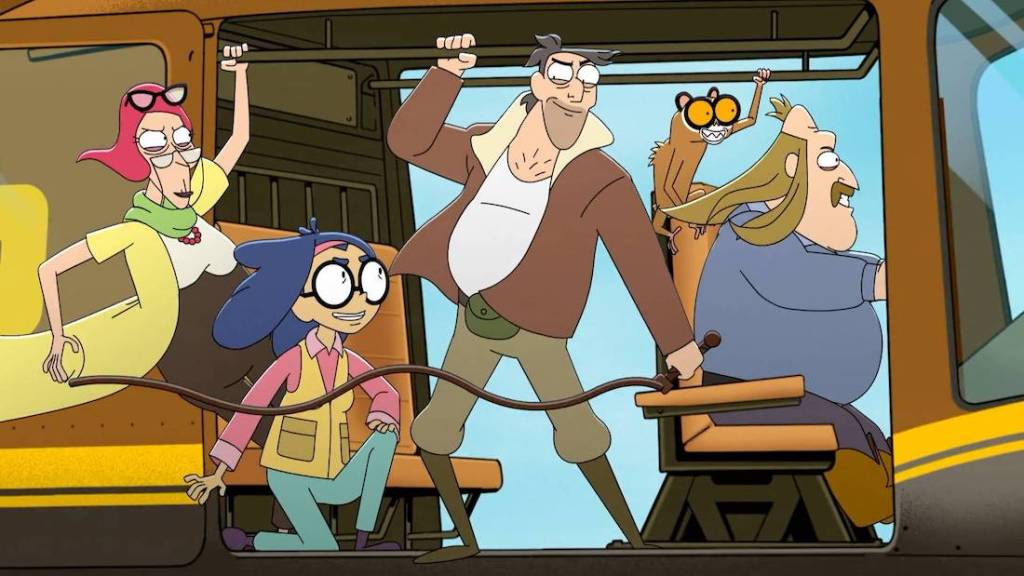
In the new Andy Samberg animated series, Digman!, archaeologists are the coolest people on the planet…a bit of stretch but go on…When it was first released, Samberg pointed out that he had childhood dreams where archaeologists were ‘badass, adventure-seeking rock stars’ and so made a show around this vision. There is a woke-ness to the show that doesn’t totally line up with the treasure-hunting tropes from past Hollywood movies that inspired it, and this is promising. It is quite refreshing to hear a non-archaeologist (and celebrity) spruik the profession in this way. Of course, the show is entertainment at the expense of fact, but what the hell do you expect? It’s meant to be entertainment. If people think archaeology is sexy, then we’ll take it!
Indeed, the reality is that archaeology may not always be about kick-ass adventures (it can be bloody challenging at times) and no, we don’t always find gold nor do we care about dinosaur fossils (for the last time, we leave that to the palaeontologists!). But yes, it is an extremely interesting job and when we do discover something that could be hundreds or even thousands of years old, it is fucking amazing.

 Momentary Cinema
Enjoyed that read..and maybe Archaeologists are the coolest people on this planet. I know because my son is one !!!!!
LikeLiked by 1 person