I have been wondering a lot about what makes the quintessential ‘American movie.’ God knows, they have been trying to hammer something home to us for as long as I have been on this earth watching movies…and I think it has something to do with the so-called ‘American Dream.’ I am aware that movies do exist outside of the States but perhaps this is not the same for a lot of people e.g. Americans themselves. Hence my focus here. And given that Hollywood (a relatively small suburb of Los Angeles, California) has always been synonymous with ‘movie-making,’ I think most people of the world are bound to connect the Big Screen with the concept of Americanism in some form or another. For better or for worse.
Indeed, the US is a massive country. It has fifty States, all different in their own identity and culture. Like all places it has a colourful and turbulent history. A history that is constantly contested, sometimes celebrated, and sometimes brushed under the carpet. For many Americans, its past is marked by pre- and post-colonization (late 15th Century). For most Indigenous Americans, there is not much to celebrate about the post-colonization period, instead they would acknowledge their deep connection with the time before that. But given that Indigenous Americans currently make up 1% of the population, the exposure of that part of America’s past has pretty much been non-existent in movies. The post-colonization period on the other hand is well represented. It is safe to say that the United States became a melting pot of cultural diversity over the past 500 years or so, with African Americans, Asian Americans, Hispanic, Latino and Pacific Islander peoples all accounting for a high proportion of the demographics today. Unsurprisingly though, White European Americans still make up the majority with almost 70%. So, is it any wonder that what we have often seen in American movies is a perspective from their cultural viewpoint? It is why the Western, in its shameful embellishment of a heroic White supremacist past, became such a popular genre throughout the 20th Century.
But I am not going to write about the Western here – I have done that before. Instead, I want to examine four other genres that seem to be as equally important to Americans as Westerns. The focus here is not on great movies, nor on stories that purport to be about America. Its about nostalgia: the rose-tinted, dewy-eyed look upon a time long past, glorified with a deep fondness and a smattering of over-sentimentality. And first up is Sports!
**************************************
Sport is very important to cultural identity because it makes heroes out of ordinary people. It is also like war…without the mass death. Essentially, it’s an easier way for Governments to promote and popularise pastimes in a nationalistic way! Most countries have their own favourite sports. In America, basketball, baseball, and American football are the three most recognised native sports, with global examples like golf, tennis, soccer and boxing closely following. This triumvirate of American sports are insanely popular. And one look at the list of Hollywood movies every year, you notice the direct result of this obsession.
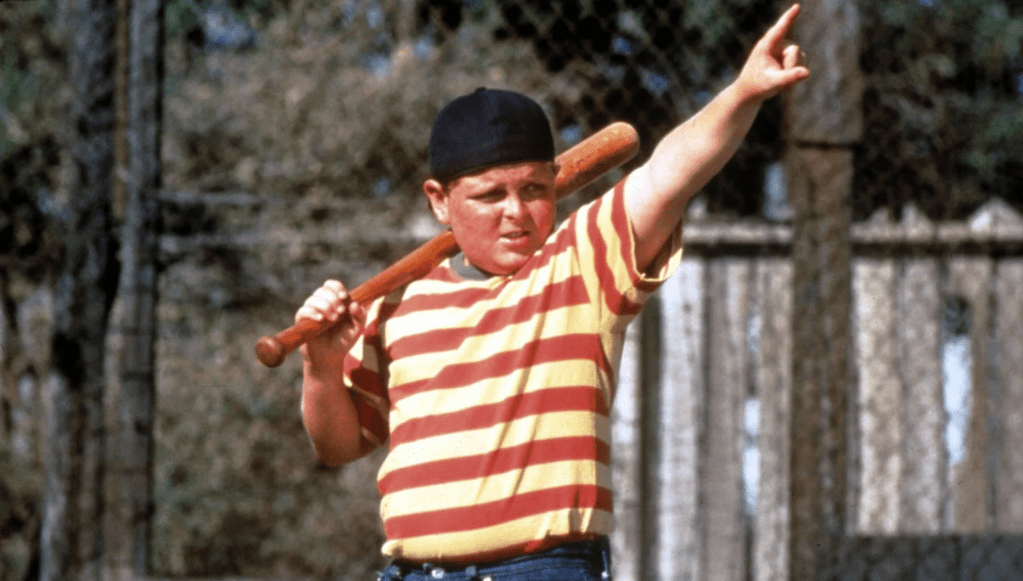
There is no doubt American baseball had its primary heyday in the first half of the twentieth century – one philosopher described it as the country’s national religion in 1919 – but it is still extremely popular today. It is not surprising to find that many baseball movies, mostly generic comedies or biopics, came out of Hollywood between the 1920s and 1950s. However, in the mid-1980s something new took hold in its popularity, and this was shown through movies that harked back to those golden years. I can track this deeply nostalgic phase between The Natural in 1984 and The Scout in 1994, and some remarkable movies it must be said in between (Eight Men Out, Major League, A League of Their Own, The Sandlot, Cobb to name a few) – even that classic Simpsons’ baseball episode was made in that time-frame.
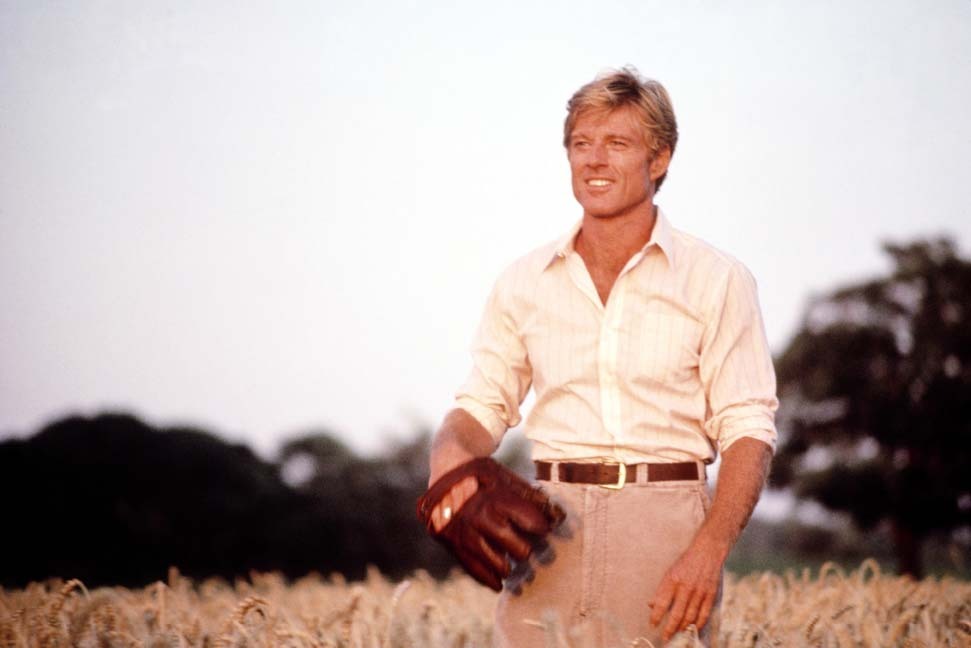
Robert Redford will be mentioned a few times during this series, mainly because he is an actor that symbolises the great American Dream in human format – white as they come, exquisitely-kept blonde hair, beaming smile, handsome and hot in equal measure, and that friendly, intellectual all-American accent. He was the ideal choice for a legendary (and fictional) baseball hero from the 1920s, 30s and 40s in Barry Levinson’s hugely successful The Natural. The film is a starry-eyed look at the time, and centres on a supernaturally brilliant baseball player, and the background is filled with reminders of how great those years were – a gift of nostalgia to the children who had grown up then: the so-called Silent Generation.
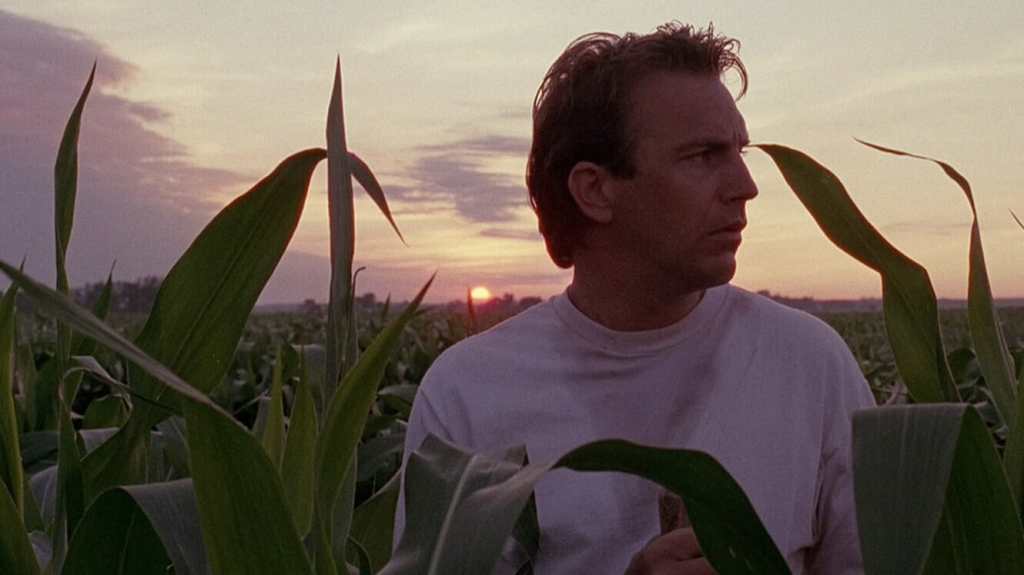
With Redford ageing in the 1980s, Hollywood was (and continues to be) tailoring up-and-coming hot-blooded, white, blonde male actors to replicate his all-American persona. Brad Pitt was exactly that in the 1990s, but before him came Kevin Costner. And why not keep the baseball movie formula while you’re at it? Costner has starred in three very successful baseball films in his career, one was Bull Durham in 1988, a terrific movie with Susan Sarandon and Tim Robbins, another was For the Love of the Game in 1999, a not-so terrific movie with Kelly Preston. But in-between, Costner gave us wistful magic with Field of Dreams (1989, directed by Phil Alden Robinson). Set in the modern day but based around a love of baseball and the great players of yesteryear, the film gave into total fantasy and by way of that, it engaged in utter unadulterated sentimentality. Costner plays a complete fool, but we constantly drift into his charm just as his wife (Amy Madigan) and daughter (Gaby Hoffman) do. The infamous whispered line ‘If you build it, he will come’ certainly grates after a while, but this is the kind of stuff Steven Spielberg wrote the book on and it clearly washes well with Americans. If you take historic sport stars, add a charming leading man with a cute middle-class family, and a corn crop-filled, Mid-West setting, then absolutely, the audience will certainly come (no euphemism intended).
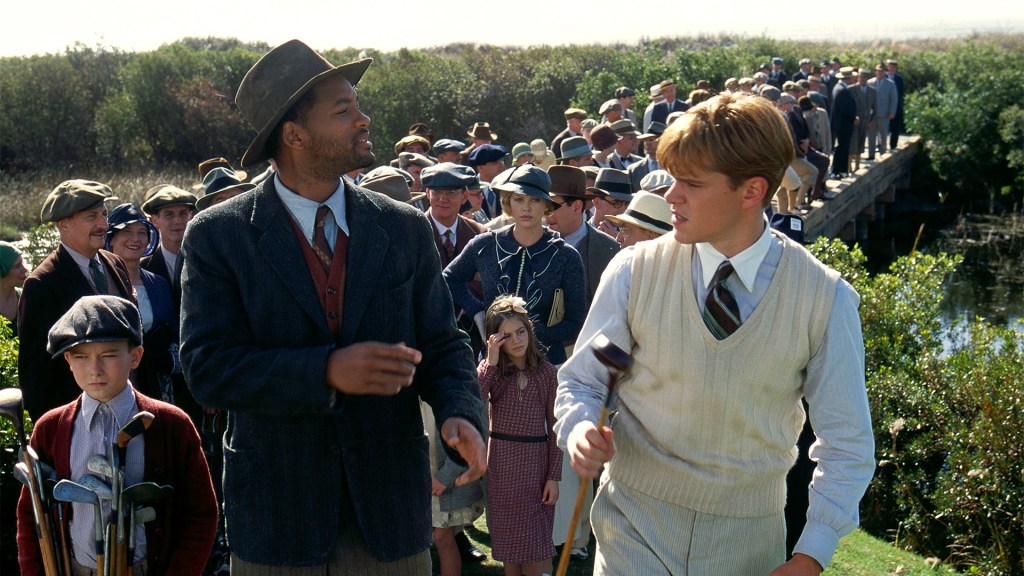
Costner has also popped up in a golf film, Tin Cup from 1996, where he plays a prodigy trying to win the heart of Rene Russo. This film is not so much going for the nostalgic vibe but rather trying the sexy-romantic route that made Bull Durham successful (and is clearly working for the recent tennis film Challengers). Not so sexy and romantic was The Legend of Bagger Vance, a film directed by Redford in 2000. This leaned in heavy to the schmaltz, and unfortunately the negative stereotype of a magical African American was employed to do so. Will Smith plays a mysterious ghostly figure who provides tutorship to Matt Damon as a golfer in the 1930s trying to rediscover his abilities after a difficult time since the end of World War I. It is not a good film, however, in Redford’s persistence to create a fond look upon the south in the 1930s, there are some things to admire in its otherworldliness. That being said, it is a prime example of Americans whitewashing history to suit their narrative.
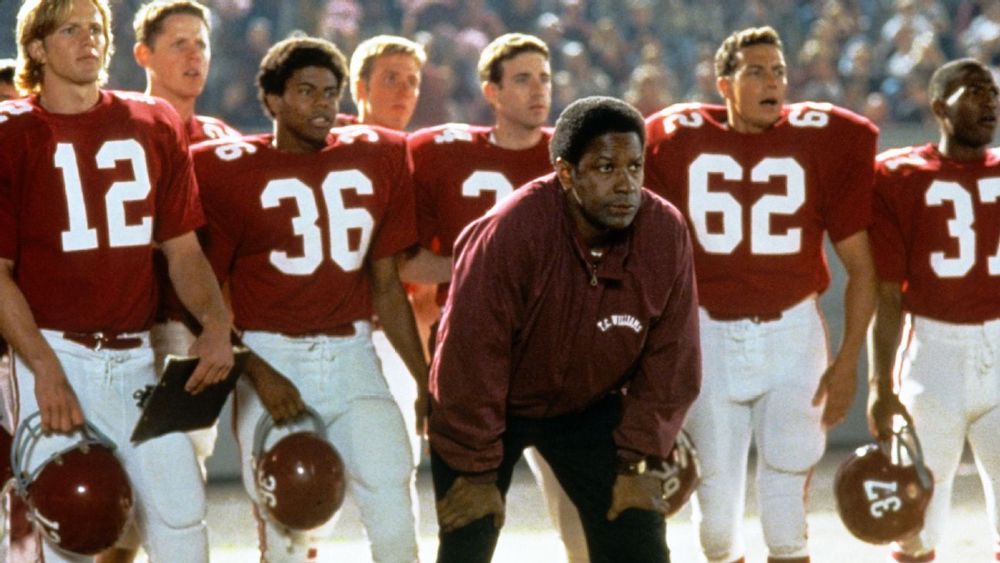
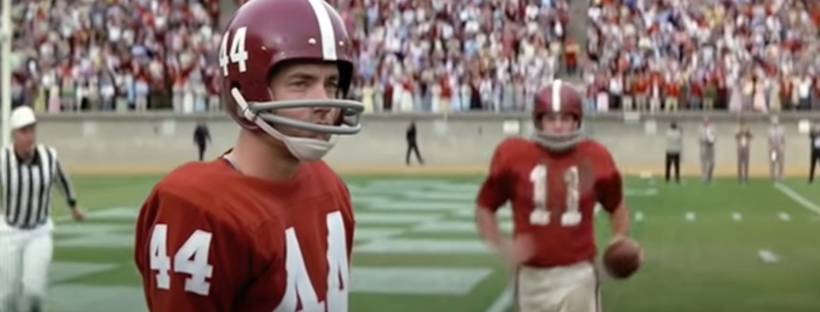
From golf to gridiron. American football has evolved to become the most popular sport in America today. In film, you will notice an increase in interest of the sport from the mid-1990s onwards (although Burt Reynolds and Charlton Heston were giving it a good go before that). Forrest Gump had a foray as a line-kicker in a nostalgia-laden homage to the American Dream in 1994, and then it seemed it was a good time to bring football into the mainstream – dramatically, as one may argue, with Tom Cruise yelling ‘show me the money’ in Cameron Crowe’s Jerry Maguire in 1996. Then there was the hilarious Adam Sandler vehicle The Waterboy in 1998 (which followed on from his lesser successful golf movie, Happy Gilmore). Varsity Blues and Any Given Sunday were semi-serious modern-day football dramas that followed in 1999, but it was Jerry Bruckheimer’s Remember the Titans in 2000 that most effectively pulled at the heartstrings for a heroic American past. Thankfully, Denzel Washington was not granted a stereotype to play like Will Smith was, and instead he embodied the real-life story of coach Herman Boone who coached a High School football team to unprecedented glory in the 1970s, bringing Black and White players together in the process. The film is a crowd-pleaser and its heart is in the right place, but Bruckheimer is a producer who loves formula, and that is here in abundance. It is mainly a surface film with an occasional dip in the murkier side of American society. It panders about race politics and simplifies its message. There is hope to be had, but is it any wonder that some people were offended by its claim that it was based on a true story, when indeed, much of it was not. It is an embellishment of the racial tensions that marked the US in the late 1960s and early 1970s, and it offers current American viewers to look back and say: ‘ah, isn’t that nice that it all worked out in the end’.
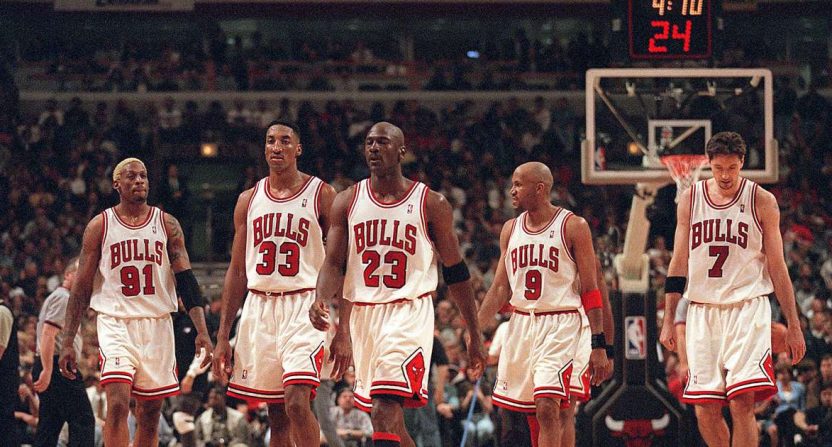
Hollywood’s relationship with basketball is a little bit more difficult. No surprise then that it is the most popular sport with African Americans. Some people would have you believe that the pinnacle of American basketball films is White Men Can’t Jump (1992) but c’mon, things have improved since then. Denzel Washington headed Spike Lee’s underrated drama He Got Game in 1998; Gus Van Sant’s Finding Forrester with Sean Connery and Rob Brown from 2000 has a basketball subplot; and Samuel L. Jackson gave a solid effort as a basketball coach in the formulaic Coach Carter from 2005. The GOAT himself, Michael Jordan, has played a major role in popularising basketball not only in America but across the world. The superb Netflix documentary series, The Last Dance, proved that enough time had passed for people to look back on the extraordinary Chicago Bulls run in the 1990s spearheaded by the phenomenal Jordan with goosebump-inducing emotion. It prompted Millennials to reminisce about a certain coolness that they grew up with through the lens of sports fashion and celebrity. It also easily made us forget about Space Jam (although that was a hugely successful film in 1996 that probably prompted all of the other basketball movies that I mentioned).
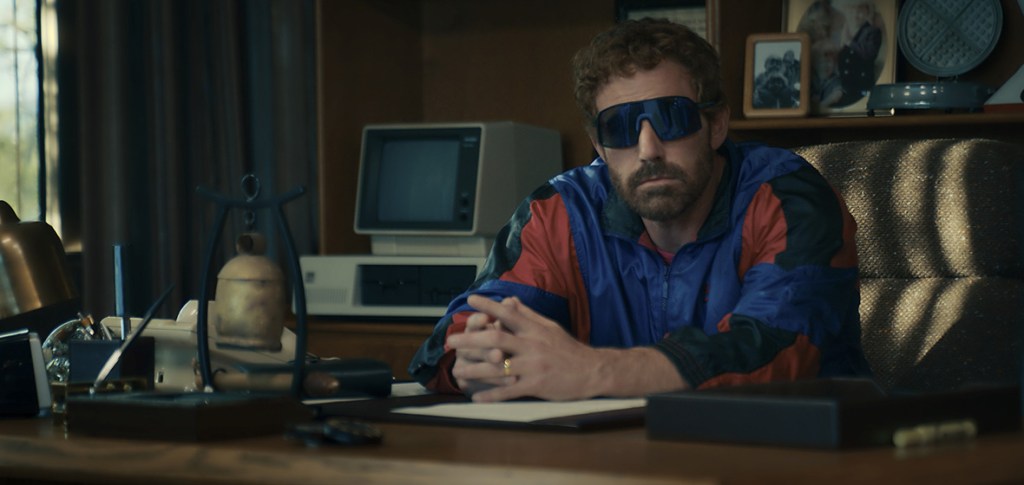
Ben Affleck’s recent feature film, Air, enhanced that period (or the lead-up to it) with a typical Hollywood treatment. Set in the mid-1980s, and concentrating on the evolution of Nike’s Air Jordan, the film does everything it can to make the period stand out. Affleck and his bestie/co-star Matt Damon both grew up in this time, so obviously were happy to evoke their own memories of the period and play it out in the movie. They seemed to have a lot of fun and the film is very much watchable, mainly because of the quality of acting and the injection of humour. But I am still perplexed as to why they chose to reduce Jordan himself to a character off-screen and never seen. But I guess its OK because Chris Tucker, Marlon Wayans and Viola Davis have enough screen-time for African Americans to make up for it…be under no illusion, this is the Affleck/Damon show!
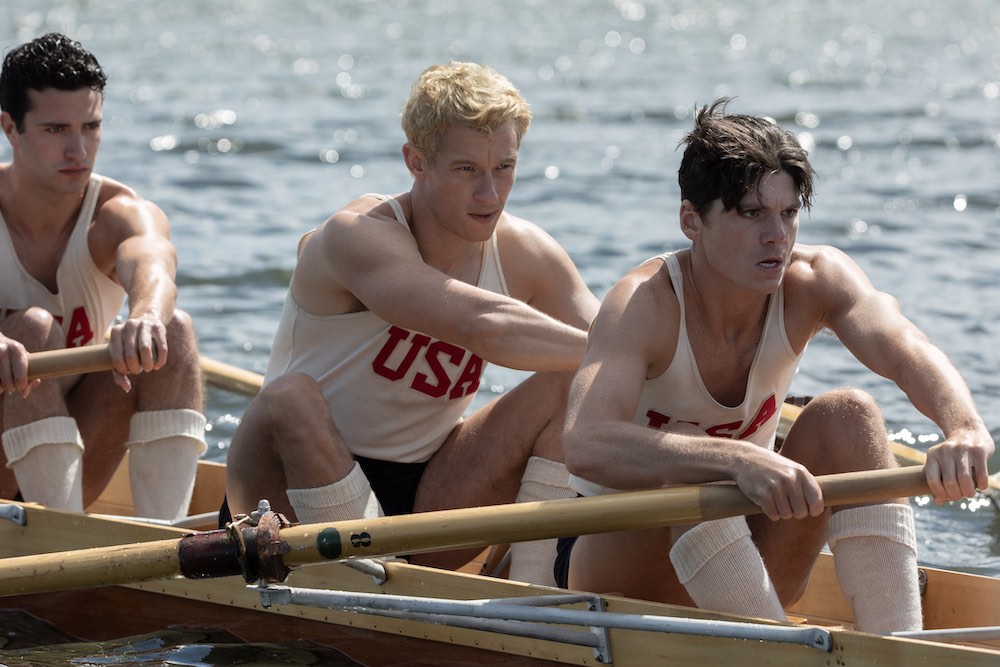
American sports films have that habit of constantly reverting to formula, some more so than others, but it is good to see more nuance now – the recent Bottoms is a brilliant comedy that turns the High School sports sub-genre on its head. It is not always the case though – unbearable old-fashion-ism still rears its ugly head now and again, mainly to get the hits from the Boomer Generation. George Clooney’s recent The Boys in the Boat about a Washington university rowing team in the 1930s was so awful, so contrived and so musty-looking that I thought I was watching a movie made in the 1980s. Films about rowing don’t do it for me, and neither do films about horse-racing of which there are many – although the films Seabiscuit and Secretariat are decent enough, they too epitomise that American obsession with sports, legends and heroes from an era that never really existed. Boxing films on the other hand I can tolerate way more, but I think boxing as a sport doesn’t sit well within the thesis here. Whereas there are some exceptions, boxing movies are usually about the underclass, the underdog, and the minority. They are not necessarily about valour, flag-flying and ‘U-S-A’ chanting (I acknowledge that Rocky IV fits that mould exactly). And they are not driven by nostalgia. In many ways, they are driven by the city streets, petty crime, and large doses of grit. In other words, they are about reality. For the record, my favourite boxing movies are: The Harder They Fall (1956), Fat City (1972), Hard Times (1975), Rocky (1976), Raging Bull (1980), The Hurricane (1999), The Fighter (2012) and Creed (2015).
But the point of this series is that American movies often abandon reality and historical accuracy in order to sell you an image of the past that is glorious and righteous, and thus, makes you feel emboldened to protect it. America, like any other country, clearly needs its heroes to lift them up in the present. Sporting greats (they always seem to be male) are a good place to start. Their victories, sometimes totally against the odds, and their charm (think of that Robert Redford smile) are what make them memorable. The beautification of context and surrounds contribute to the successful formula. I suppose this has always bugged me about Hollywood mainstream movies but who am I to put a stop to the profit-making machine? And sometimes, as I have pointed out, those movies can actually be pretty good.

 Momentary Cinema