Memories
‘The Way We Were’ by Barbra Streisand
Light the corners of my mind
Misty water-colored memories
Of the way we were
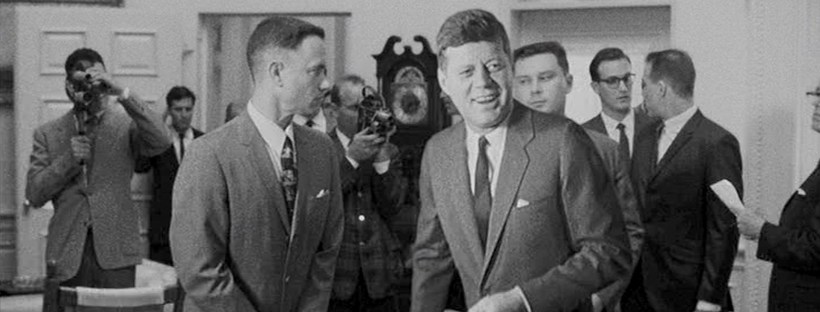
The Golden Age in the US is generally regarded to be from 1950 until the mid-1970s. It was a time when the instabilities of the earlier decades of the 20th Century (World War I, The Great Depression and World War II) gave way to an economic boom and rising prosperity across the country. The 1950s saw the birth of ‘rock and roll’ and the advancement of technology into people’s homes. Although the 1960s were defined by the tumultuous events of the Vietnam War, it also saw the blossoming of the counterculture phenomenon, which heralded widespread alternative lifestyles and the seeking of cultural freedoms. This continued into the 1970s, but the decade gradually gave way to economic stagnation and increasing unemployment and the optimism from the previous decades changed to much cynicism and discontent.
This of course is how history relates. The pathway of the individual American citizen may have been very different. Whatever the case may be, the ‘baby boomers’ who reached adulthood during that time are the demographic who keep the nostalgia for their so-called Golden Age going today. The music and movies that were made in that period are held up as the greatest and nothing comes near to it anymore, or so it is believed. Boomer directors like Steven Spielberg, Martin Scorsese and George Lucas started making movies of their own in the 1970s, and they all enthusiastically communicated the greatness of the times they had come from (Spielberg continues to do it even now). Here, I take a look at the films that were not made during the Golden Age but the ones that hark back to it with a great fondness.
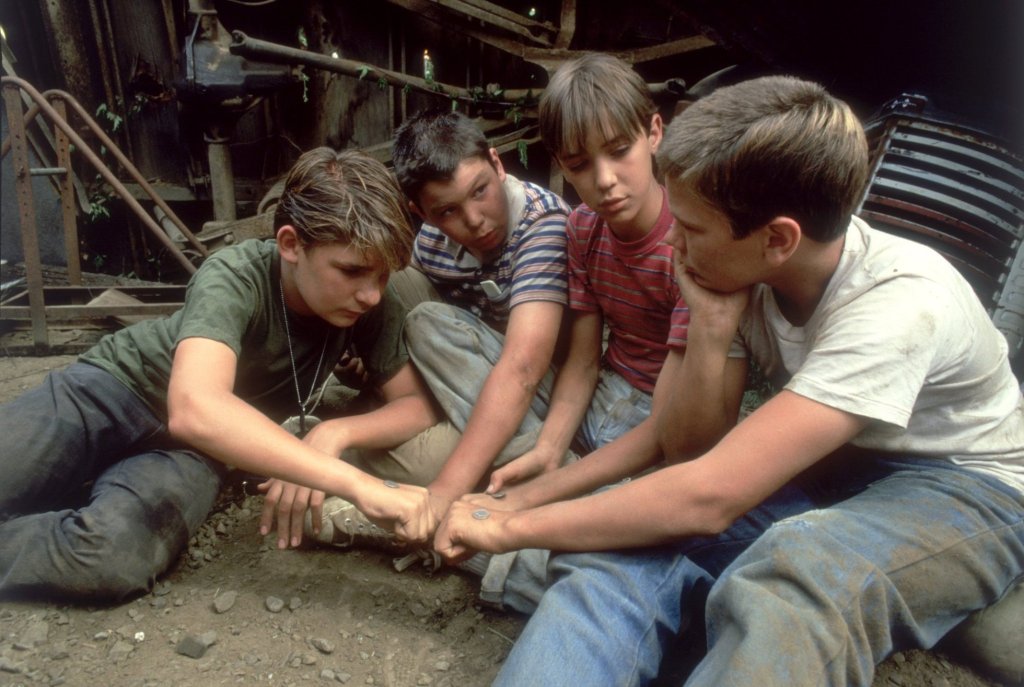
The best place to start is Rob Reiner’s 1986 adaptation of Stephen King’s novella The Body: Stand by Me. It was an instant classic mainly because it weeps with a deep American nostalgia. Set in the heart of Oregon in 1959, a group of twelve-year-olds embark on a very adult adventure: searching for a dead boy’s body in the woods! It has some of the great kid/teen actors of the eighties: the tragic River Phoenix, one of the Coreys (in this case, Feldman), a pre-hunk Jerry O’Connell, John Cusack, Will Wheaton (later to be Wesley Crusher in Star Trek: The Next Generation) and Keifer Sutherland. For both Stephen King and Rob Reiner, the story had autobiographical roots. King said he loved the movie because it really connected to the content – he stated the novella was essentially based around his experiences growing up with his mother and older brother in Maine. Reiner moved the setting to the west of the US, but he did carry the fictional town name of Castle Rock with him (incidentally, Castle Rock exists in many of King’s novels and it is always located in Maine) – he stated that he recognised himself in the character of Gordie because he struggled for his father’s attention growing up (his father being the director Carl Reiner). The backwardness of rural America in the late fifties as well as the struggle of young family members with older one’s are prominent elements, but the film also displays an aesthetic of place and a fondness for the times (e.g. the soundtrack is a fine collection of rock and roll and R&B classics from that year).
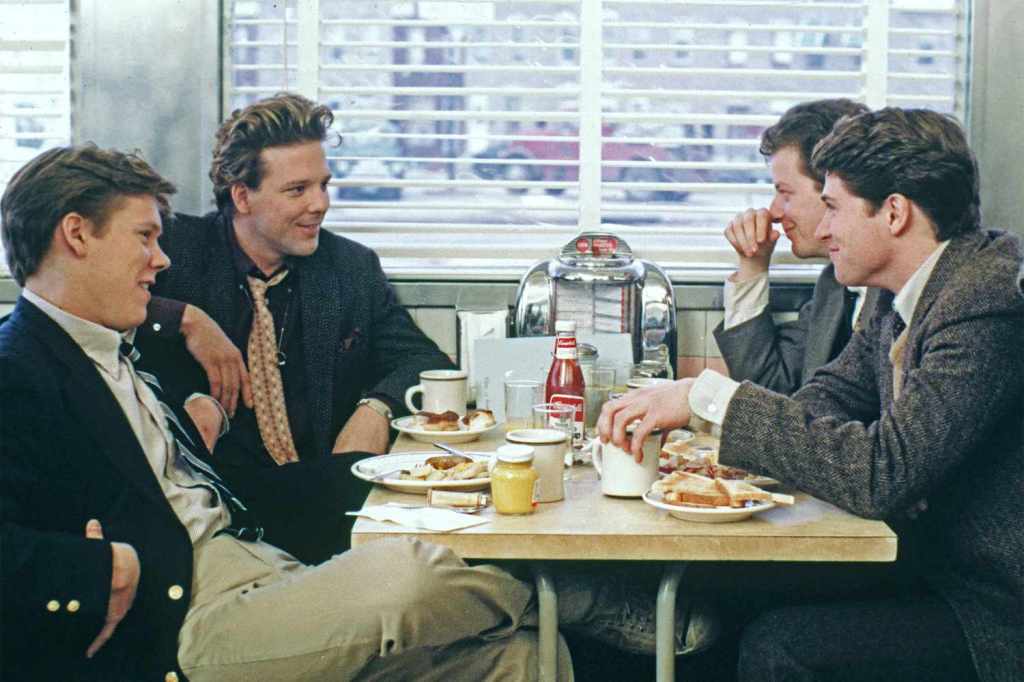
Moving over to Baltimore, Maryland but set in the same year (1959), Barry Levinson marked his directorial debut in 1982 with the nostalgia-driven comedy, Diner. There was no major plot involved, but at the time in the early eighties, these types of films were appearing with increasing regularity – dialogue-rich, intelligent, improvised acting, non-traditional narrative. It’s basically about the antics of a group of college friends as they embark on the big bad world of being adults (the tagline is ‘Suddenly, life was more than French fries, gravy and girls’) but this is not Animal House or Porky’s, it is much more sophisticated. Steve Guttenberg, Daniel Stern, Mickey Rourke, Kevin Bacon, Paul Reiser and Ellen Barkin all became big stars because of Diner, and you can see why: they all bring different characterisations to the table. But at the end of the day, Levinson created a winner because he captured the essence of the actual ‘diner culture’ experienced by those young folk on the east coast of the US in the 1950s and 1960s.
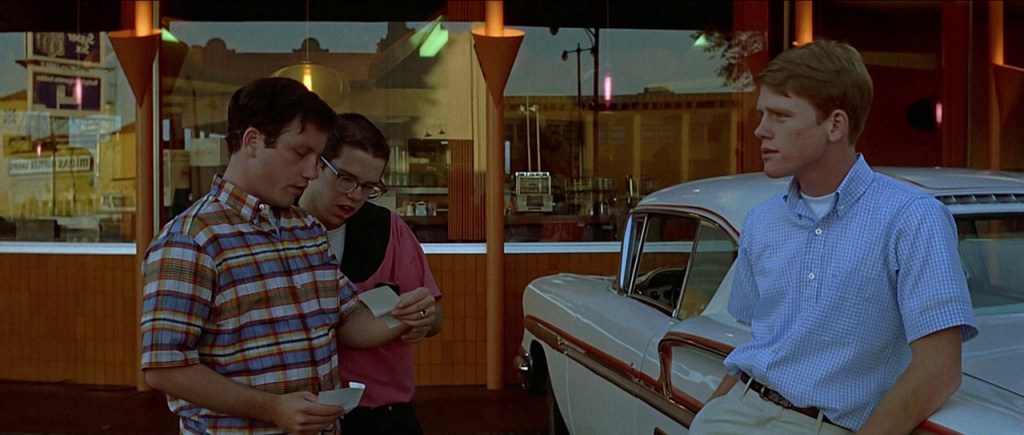
As a contrast, there is American Graffiti. Set in Modesto, California in the early sixties, George Lucas called upon his experiences growing up there to make his first Box Office breakthrough in 1973 about the goings-on of high school graduates at the end of their summer holidays. Unlike Levinson, who preferred a drop of authenticity with his dose of nostalgia, Lucas was firmly poking his head into the business of entertainment and as a result, he leans into the popcorn thrills and emotional spills. However, that is not to say that American Graffiti is all fluff. It is a genuine film with a rich grounding in 1950s Californian culture, and it was impressively made on a relatively modest budget. Its resounding success and entry into the American cinematic hall of fame speaks for itself. It has many unforgettable moments, many of which for me include the sound of DJ Wolfman Jack and his introduction of Jukebox classics such as ‘Green Onions.’
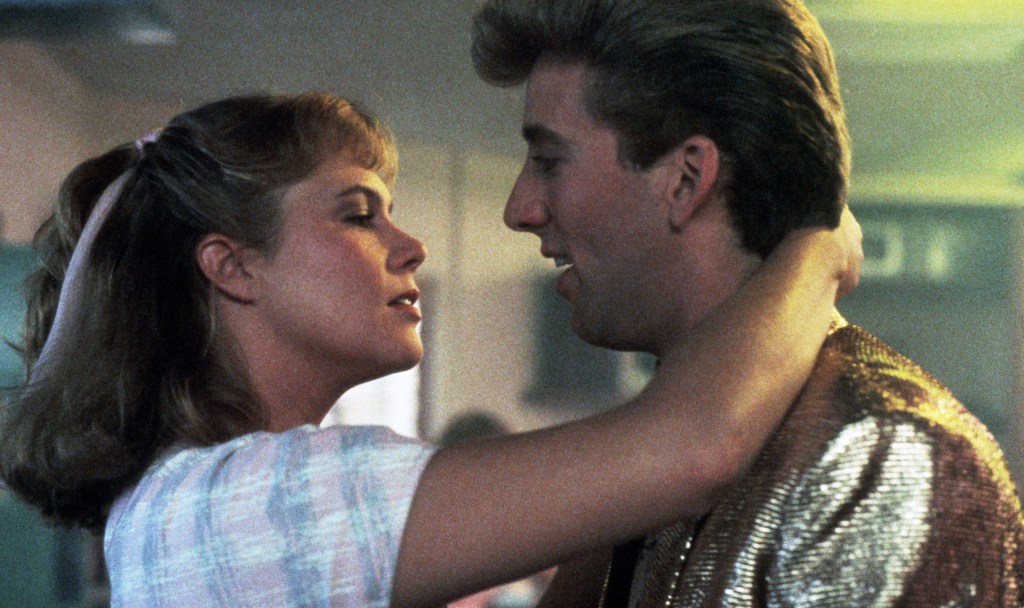
Francis Ford Coppola served as producer on Lucas’s film, and he was no stranger to directing boomer-based nostalgia films himself. After The Outsiders and Rumble Fish in 1983, he made Peggy Sue Got Married in 1986, a film that gleefully transports audiences back to the early 1960s (and takes its name from a song by that short-lived leader of fifties pop music, Buddy Holly). Kathleen Turner plays the eponymous lead, who in the present-day faints at her High School Reunion and time travels back to her senior year. Nicolas Cage, Coppola’s nephew, grossly overacts in the role as ‘the love of her life’ and there are cameos from Jim Carrey, Sofia Coppola and Maureen O’Sullivan. Turner, a thoroughly underrated actor, is brilliant and may be the key reason why the film stands out in the crowded field of ‘slice of nostalgia’ flicks from the 1980s. The American High School of the fifties and sixties has certainly become the stuff of legend thanks to hyper-stylised films like Grease, and Peggy Sue Got Married did nothing to curtail the myth-making, but at least it gave some surreal moments to be a bit more ‘off-the-mainstream.’
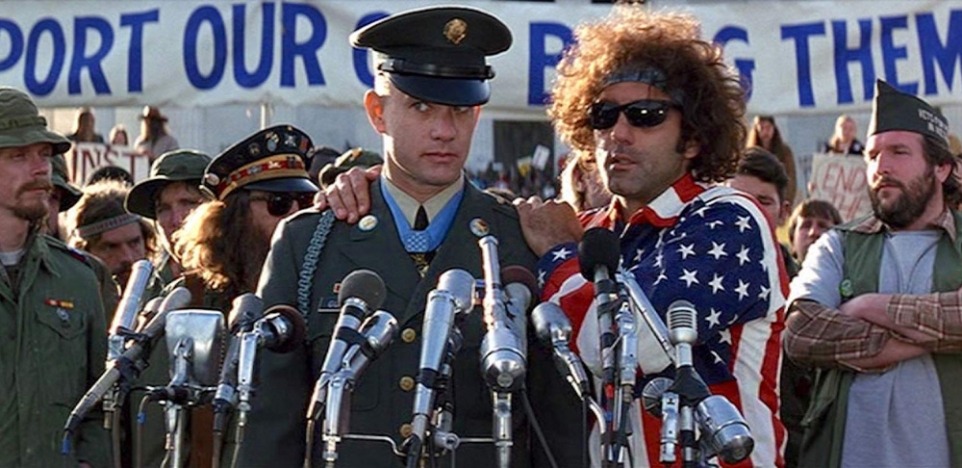
I know ‘surreal’ may not be a word many have used to describe Forrest Gump in the past, but I think it classifies as that for me. Robert Zemeckis has made a career out of his slightly off-kilter approach to mainstream film-making, and like it or loathe it, he really did make a worthy classic with this quirky All-American odyssey in 1994. Billions of families have sat down in their living rooms to watch this highly likeable film over the years, and one ponders whether the likeability factor is because of Tom Hanks’ magnetism or because of the generous serving of warm apple-pie nostalgia. I would venture that it is both. But looking now upon Gump’s dumbness and the film’s unashamed white-ness, it does appear to be very problematic. Having said that, the character and film does make sense when you understand that Gump embodies the bumbling ride that ‘baby boomers’ who knew no better took in search of their American Dream. Like all the films described here, the soundtrack is very important to the Golden Age nostalgic feel, and it is committed in carrying us through the years with classic hits like ‘Hound Dog’ by Elvis (1956), ‘California Dreamin’’ by The Mamas & the Papas (1966) and ‘Fortunate Son’ by Creedence Clearwater Revival (1969).
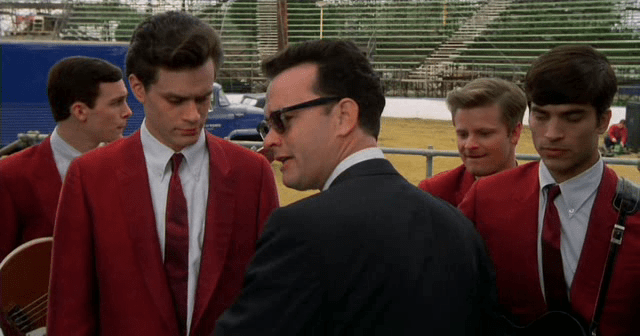
Tom Hanks obviously picked up on the formula successfully channelled in Forrest Gump because a few years later, he made his directorial debut with That Thing You Do!, a musical comedy about a fictional rock and roll band from the 1960s – clearly based on The Beatles, The Beach Boys and other pop bands of the era. Hanks himself is one of the mid-stage baby boomers, having been born in 1956, so it is questionable whether he had a lot of authentic engagement with Beatlemania as it happened, but he certainly gained a lot of knowledge about 1960s pop culture over time to make this movie (which he wrote and directed). Its not a great movie but there is a light, cutesy-wootsy, sing-along world for audiences to enjoy, and that world is very much embedded in a nostalgic feeling of what America could have been like in the 1960s (even though it wasn’t really). There’s charm, optimism and fun. Hanks borrows Spielberg’s deft hand at film-making for the American masses and delivers familiarity as well as sentimentality for the baby-boomers, who really want any opportunity to tell their descendants the Golden Age was indeed the greatest time to be alive…and everything nowadays is just shit.
Memories
‘The Way We Were’ by Barbra Streisand
May be beautiful and yet
What’s too painful to remember
We simply choose to forget

 Momentary Cinema